



Related articles







Growing Lupins in Pots or the Ground: A Full Guide


Lupins are among the most attractive perennials out there, lighting up flower beds with their dramatic spires. Coming in a seemingly endless array of sizes and colours, these plants are versatile, hardy and worthy of a spot in your garden. The question of how to grow lupins is, fortunately, a relatively straightforward one.
In this guide, we’ll walk you through growing lupins from seed, cuttings and division, as well as information on container growing compared to growing in the open ground. We’ll round it out with some handy aftercare advice and, before you know it, you’ll be ready and raring to get these cheery customers into your garden.
Jump to:
- Growing lupins from seed
- Growing lupins from cuttings
- Growing lupins by division
- Growing lupins in pots
- Where should you plant lupins?
- Ongoing lupin care
How to grow lupins from seed
If you want to fully commit to the growing journey and go the whole horticultural hog, then you’ll want to give growing your lupins from seed a shot. Now, just to be fully candid, seed-growing lupins can be a bit troublesome, with susceptibility to rotting and a dislike of transplanting proving issues for many a budding gardener. However, if you persevere, the rewards are great.
Sowing your lupin seeds
A stumbling block gardeners often first come across when attempting to grow lupins from seed is the pesky exterior seed coating, which can make it more difficult for the seed to germinate. To get around this, it’s worth giving your seeds a little cut with a pocket knife, then letting them soak in water for 24 hours or so.
Once that’s done, you can sow your seeds in some potting mix (soil-based with some perlite mixed in) at roughly 12-14°C (a degree or two either side is generally fine). Now, because root disturbance is one of those factors most frequently impeding successful germination, it’s worth sowing your lupin seeds in their own pots, rather than a propagating tray or old egg carton. This way, you remove the need to move your lupins until it’s time to plant them out in the garden.
Planting your lupins out
You can plant your lupins outside after the last risk of frost has passed in spring, but first hardening them off for a week or so. This involves moving the plants outdoors and into the sun each day so that they can become accustomed to the conditions, before eventually going on to plant them in their final position in your flowerbeds or pots.
Did you know? Lupins are actually legumes, belonging to the same family as peas, beans and lentils!

How to grow lupins from cuttings
Taking your cuttings
If you’ve already got some lupins in your garden, then you can skip the seed-sowing process and simply take some cuttings with which to propagate some new lupin plants. Towards the end of spring, take a sterilised, sharp pruning knife and take cuttings close to the ground, choosing the sturdiest looking shoots once they’ve reached a few inches tall.
Preparing your cuttings
Once you’ve got your cuttings, dip them in rooting hormone and then place them into individual pots filled with perlite as opposed to compost – doing this helps mitigate against root rot. Place your pots somewhere with good light, but try to avoid placing them in direct bright sunlight. Once the cuttings have rooted, make sure to harden them off for a couple of weeks before planting them in their final position.

How to grow lupins by division
The final way to get new lupins (besides ordering some from us, of course!) is through the process of division. Like seed-growing your lupins, division can come with its difficulties, mainly because of the deep tap roots that these plants possess. It’s still doable, though, you just have to take care. Lupin division should be carried out in early spring.
Lifting your lupin(s)
With a garden fork, gently lift the plant from the ground, then cut through the plant with a sharp spade to separate the multiple crowns. The important thing is that each separated portion of the plant retains some of that original taproot.
Planting your divided lupins
Once you’ve cut through the plant to give you your smaller, individual lupins, plant them where you like, making sure to firm in the surrounding soil, and giving them a good watering. It’s important to remember that lupins inherently dislike root disturbance, so there will always be a chance that your transplanted lupins either fail to settle into their new spot or at least take a little longer to establish than you might expect.

Growing lupins in pots
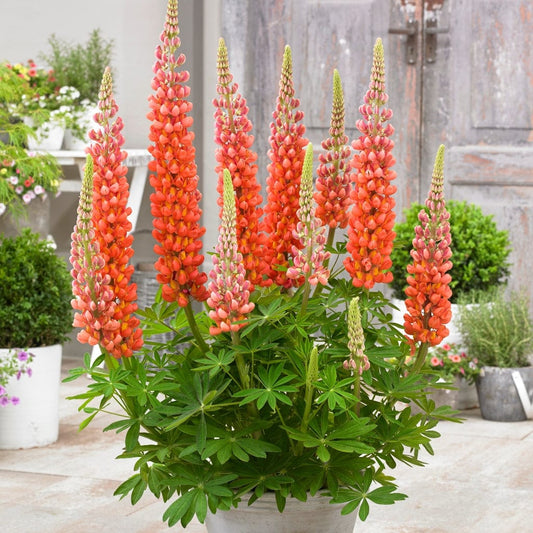
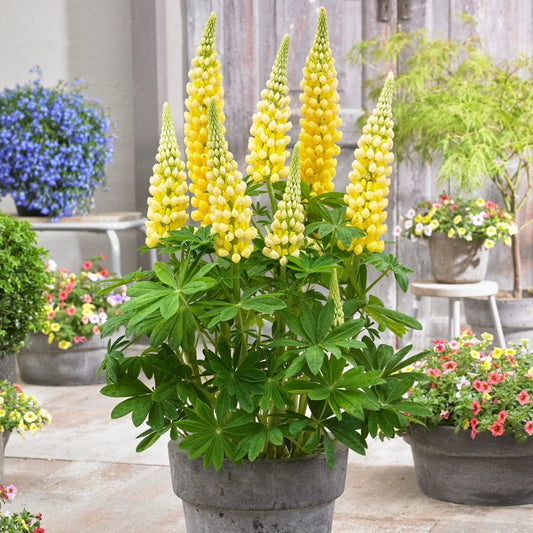
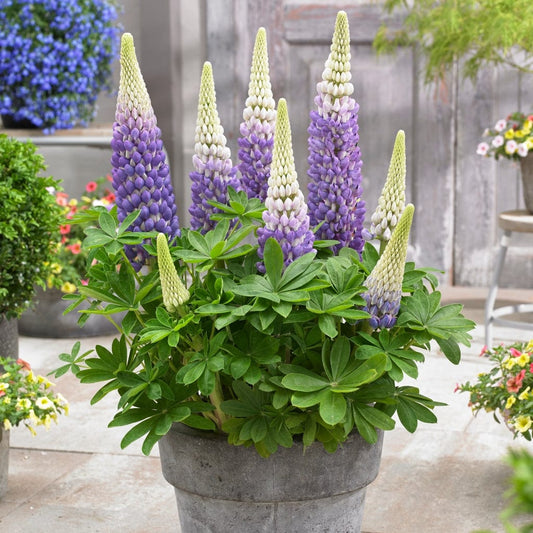
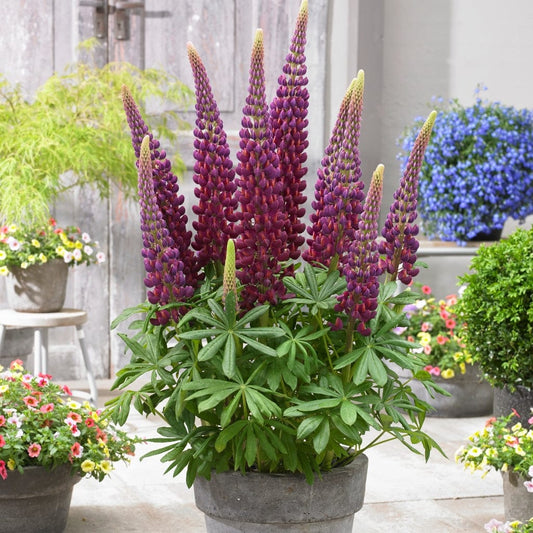
Lupins look spectacular in pots. Like, really spectacular. There’s something about the shape of their flowers that forms such a complete aesthetic image when planted in a nice terracotta pot. And fortunately, they also grow well in pots, you just need to make sure you get an appropriate container.
Because of their tap root, lupins should be planted in pots deep enough to accommodate it, and you should use a loamy, soil-based compost (like John Innes No.2) with some perlite or horticultural grit mixed in just to maximise drainage.

Where should you plant your lupins?
If you’re planting your lupins in the open ground, you should aim for a spot in full sun as lupins love a good bask. On the soil side of things, moist but well-drained soil is best. Depending on the variety and its eventual height, lupins can be planted at the front, middle or back of beds and borders – the shortest dwarf varieties can be as short as 30cm, while the tallest varieties can reach upwards of 90cm.

Ongoing care for lupins
To help your lupins flourish, water them regularly throughout their first growing season to help them establish. Once established, however, they will only need additional watering during hot, dry spells. Container-grown plants require more watering than those lupins grown in the open ground as the compost dries out more quickly. As lupins don’t need particularly fertile soil, you can get away without any additional feeding.

Final thoughts
Lovely, lovely lupins are as versatile as they are beautiful to look at, and hopefully, having read this guide, you’ll feel well-equipped to get your lupins thriving, be that in a pot or flowerbed. Make sure to check out our perennial range to find more fabulous flowering plants!
Last updated: 05/05/2026