

Related articles




Dividing Perennials: A Beginner’s Guide

If your clump-forming, herbaceous perennials have done a lot of growing this year and are looking crowded, then it might be time to divide them. Done the right way, dividing perennials can make them stronger, healthier and less crowded – it also means you get more plants. Sounds like a win-win situation as far as we’re concerned…
If the thought of digging your plants up and apart sounds daunting, then don’t worry, provided you follow the steps outlined in this guide, your plant(s) should have an almost 100% chance of surviving and establishing in its new position!
Jump to:
- What is the best time to divide perennials?
- Which plants can be divided?
- How do you divide plants?
- Aftercare for divided plants
What is the best time to divide perennials?
There are a few periods in which you can divide your perennial plants; either before flowering between March and May, or in the autumn months after flowering (September to November). For those plants that flower in spring, such as dianthuses and primulas, these are best divided in the summer months (June to August) once they have finished flowering.
Which plants can I divide?
Most herbaceous perennials can be divided, including (but not limited to) agapanthus, crocosmia, delphinium, eryngium, euphorbia, geranium, helianthus, heuchera, hosta, ornamental grasses, primula, salvia, sedum and verbena.
It’s worth noting that there are a few plants that don’t respond well to being divided. These include lavender, dicentra and poppies. The reason? Well, some have deep taproots, others have thick, woody stems, and some simply don’t like to be disturbed, once established.

How do you divide plants?
Lifting the plant(s)
The first tip is to make sure you pick a time when the ground is dry to divide your plants. It sounds obvious but you’d be amazed at how many people try lifting perennials in damp conditions, leading, frankly, to a bit of a muddy mess. Using a garden fork, lift your plant very gently so as to avoid damaging the root network. Next, shake off any excess soil so that you can see the roots clearly.
Dividing the plant(s)
Fibrous-rooted plants
For small fibrous-rooted plants, such as hostas and heucheras, pull the clump apart gently with your hands. Larger hostas with tough roots may need dividing with a sharp spade. For larger fibrous-rooted plants, use two garden forks to loosen and break up the root ball, before dividing it further.
Woody crown plants
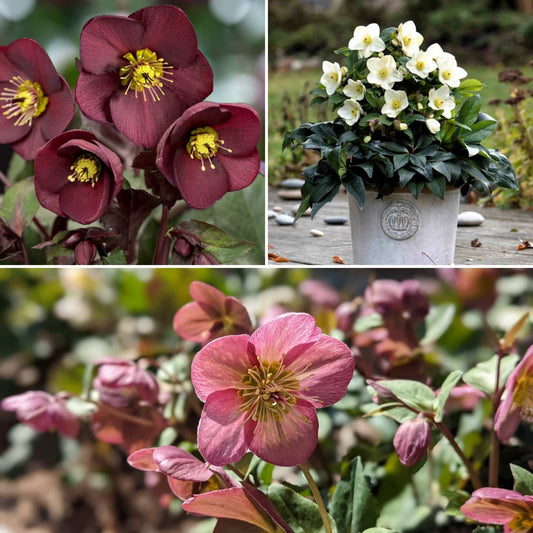
For plants with woody crowns, like hellebores and delphiniums, cut them in half with a sharp spade or knife, ensuring that the stems are as evenly distributed between the separated clumps as possible. Make sure your spade or knife is sterilised to avoid risk of infection – you don’t want to risk infecting a previously healthy plant in the pursuit of its propagation…
Corm plants
To divide corm-based plants like crocosmia, dig roughly 30cm down, lift the corms gently – they will look like a horticultural string of pearls. Next, tease them apart and replant sections in their desired new spot (at their original depth). Discard any that look potentially diseased or wizened (shrivelled).
When dividing plants, you should be aiming for between three and five healthy shoots per clump. Do this every two to three years as necessary, so as to avoid overcrowding. If you’re more of a visual learner, then check out this video from the RHS below which has some more handy tips on dividing perennials.
Aftercare
To ensure your plants thrive in their new position (or existing position), there are a couple of things to note. Replant the clumps as soon as possible at their original depth, with the shoots above the soil. Add some compost or other soil improver (like well-rotted manure).
Water them well and, most importantly, make sure they don’t dry out in the first few weeks after planting. If a divided plant fails to re-establish in a new spot, then there’s a good chance that the culprit is a lack of watering. Alternatively, you can pot the clumps up individually and keep them in a warm place over winter until they have grown bigger, then plant them out in the spring.

Final thoughts
Lifting and dividing your perennial plants offers a fantastic (and economical) way to grow your garden, and does so without requiring much effort. Be sure to keep your garden tools clean and take care while separating roots – besides that, go forth and let your perennials multiply!Last updated: 24/04/2026