




-
Regular price From £30Regular price
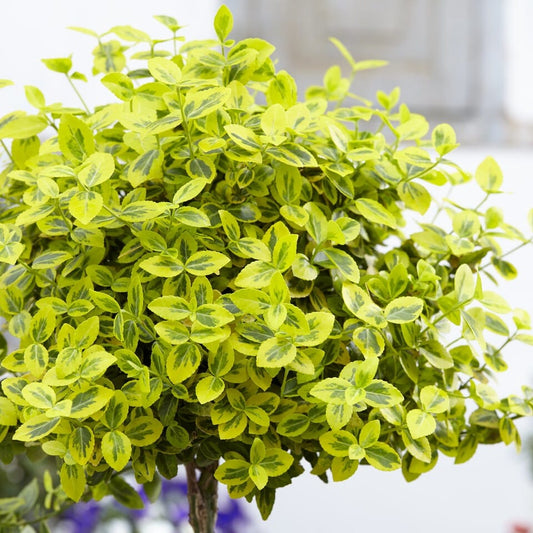
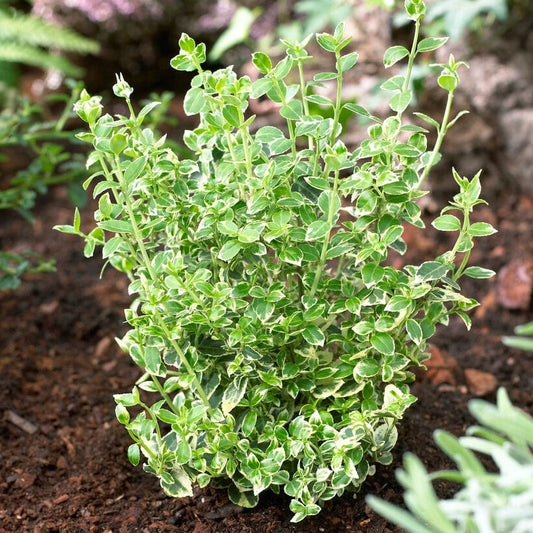
£35Sale price From £30Patio Spindle Tree | Euonymus fortunei 'Emerald Gaiety'
The jewel your patio deserves
- Upright patio tree with a bushy head
- Small tree - grows up to 1.5m (when pruned)
- Rounded, variegated green foliage (evergreen)
- RHS Award of Garden Merit winner
2 options available
-
Regular price £25Regular price Sale price £25
Euonymus 'Green Spire'
A mighty fine foliage plant
- Compact upright shrub
- Small shrub - grows up to 1m
- Glossy evergreen foliage
- Easy to grow and fully hardy
1 option available
-
Regular price £25Regular price Sale price £25
Euonymus japonicus 'Ovatus Aureus'
Variegated rock star of a shrub
- Charming, bushy shrub
- Medium shrub - grows up to 3m
- Superb green and chartreuse evergreen foliage
- RHS Award of Garden Merit winner
1 option available
-
Regular price £30Regular price Sale price £30
Patio Spindle Tree | Euonymus fortunei 'Emerald 'n Gold'
Untold riches await...
- Patio tree with a gently spreading habit
- Small tree - grows up to 1.5m (when pruned)
- Chartreuse-margined evergreen foliage
- RHS Award of Garden Merit
1 option available
-
Regular price From £35Regular price Sale price From £35
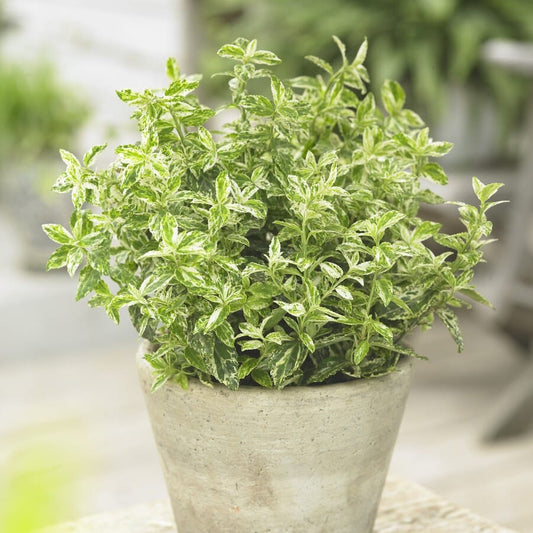
Euonymus fortunei 'Harlequin'
The leaves? A mottled marvel
- Lush, spreading bushy form
- Low-growing shrub - achieves 1-1.5m
- Boasts evergreen leaves and striking blooms
- Superb for creating a natural garden screen
1 option available
-
Regular price From £45Regular price
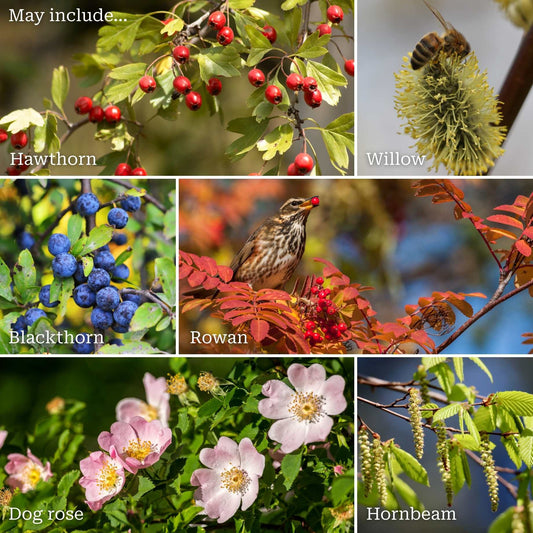
£60Sale price From £45Best Mixed Native Wildlife Hedging | Growers' Choice
An ecological haven
- Packed with colour, flowers & fruit
- Food and shelter for insects, birds & mammals
- UK native varieties handpicked by our grower
- Hardy and easy to maintain
Currently out of stock
-
Regular price From £25Regular price
£30Sale price From £25Best Evergreen Shrubs
Shrubs that don't take breaks...
- An assorted mixture of habits (mainly bushy)
- Features shrubs of various sizes
- Includes different flowers, foliage and forms
- Evergreen shrubs for year-round interest
Currently out of stock
-
Regular price From £4Regular price Sale price From £4
European Spindle Hedging | Euonymus europaeus
The garden designer's favourite
- Yellow flowers, red fruits & warm autumn hues
- Keep trimmed for a formal hedge
- Average growth rate - 20-40cm per year
- Grows up to 3m or keep trimmed at 1-3m
Currently out of stock
-
Regular price From £30Regular price Sale price From £30
Best Shrubs For Shade
Who needs sun, anyway?
- Includes shrubs of various habits (eg. bushy)
- Features shrubs of various sizes
- Hardy, low-maintenance shrubs
- The perfect selection for shadier gardens
Currently out of stock
-
Regular price From £25Regular price
£39Sale price From £25Best Small Evergreen Shrubs
Little shrubs, big impact
- Neat, compact shrubs for smaller spaces
- Features shrubs of various sizes
- Includes a selection of flowers and foliage
- Small enough for patios and compact gardens
Currently out of stock
-
Regular price From £28Regular price Sale price From £28
Best Fast Growing Shrubs
Blink and you'll grow 'em!
- A mixture of bushy and spreading shrubs
- Features shrubs of various sizes
- Fabulous foliage in an array of shades
- An ideal selection to quickly fill a garden
Currently out of stock
-
Regular price From £15Regular price Sale price From £15
Euonymus fortunei 'Emerald Gaiety'
Bold vivid elegant displays
- Graceful, bushy shrub form
- Small shrub - reaches around 1-1.5m
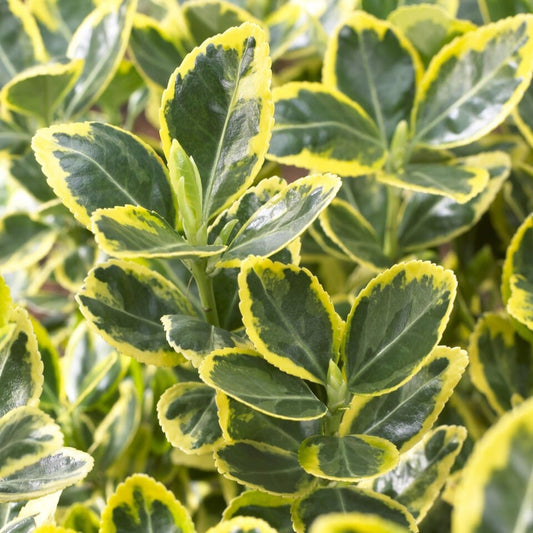
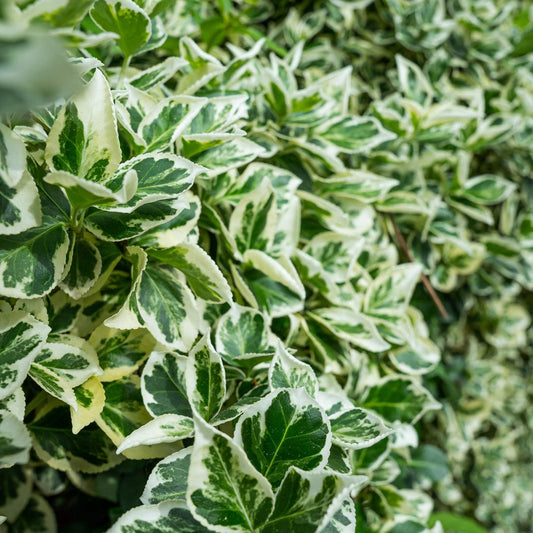
- Evergreen leaves with striking white margins
- Perfect for adding year-round structure
Currently out of stock
-
Regular price £15Regular price Sale price £15
Euonymus japonicus 'Susan'
Elegant cream margins
- Bushy, spreading canopy shape
- Compact bush - grows up to 1-1.5m
- Boasts evergreen leaves and radiant blossoms
- Ideal for modern and courtyard gardens
Currently out of stock
-
Regular price £30Regular price Sale price £30
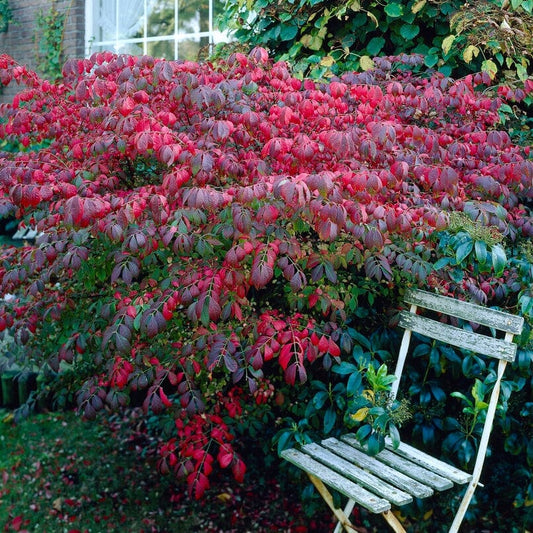
Euonymus alatus 'Little Moses'
A wall of fiery autumn colour
- Rounded, arching spreading habit
- Dwarf bush - grows to 1-1.5m
- Evergreen leaves with vibrant flowers
- A fantastic focal point for small gardens
Currently out of stock
-
Regular price £14Regular price
£23Sale price £14Euonymus 'Harlequin'
This shrub is no joke
- Beautifully toned vergreen variegated leaves
- Fully hardy and low maintenance
- Slow growth rate - 10-20cm per year
- Grows up to 1m
Currently out of stock
-
Regular price £14Regular price
£23Sale price £14Euonymus 'Emerald 'n' Gold'
Jewel toned & perfect for pots
- Evergreen variegated green & gold leaves
- RHS Award of Garden Merit winner
- Slow growth rate - 10-20cm per year
- Grows up to 1m
Currently out of stock
-
Regular price £18Regular price
£25Sale price £18Euonymus alatus 'Blade Runner'
A dazzling autumn display
- Winged leaves and pale flowers
- The most vibrant red autumn colour
- Slow growth rate - 10-20cm per year
- Grows up to 2.5m or keep trimmed at 1-2.5m
Currently out of stock
-
Regular price £14Regular price
£23Sale price £14Euonymus 'Emerald Gaiety'
Elegance all year round
- Evergreen variegated leaves, tinted pink in winter
- RHS Award of Garden Merit winner
- Slow growth rate - 10-20cm per year
- Grows up to 1m
Currently out of stock



















Roots' Cotswolds Valley Nursery
Meet Cameron
Putting shrubs in the starlight (and boy do they shine…)
Cameron is mad about plants, which is lucky, really, because he’s absolutely surrounded by them here at the nursery. Having studied at the Student Plant Unit at Pershore College, Cameron went on to compete at the Grand Finals for the 2022 Horticulturist of the Year Awards. With a team of dedicated growers on hand to help, Cameron utilises our industry-leading nursery (and the lovely, fertile conditions of the Cotswolds) to grow shrubs that aren’t just good-looking, they’re good-growing too.
Euonymus FAQs
What is euonymus?
Eunonymus are compact flowering shrubs, small trees or climbers (depending on variety) which can be evergreen or deciduous. They’re prized for their vibrant foliage and in deciduous varieties, their bold autumn colour.
Which types of euonymus are suitable for growing in the UK?
Eunoymus plants which grow happily in the UK include Eunonymus fortunei (climbing or ground cover plants), Euonymus japonicus (evergreen shrubs) and Euonymus alatus, deciduous shrubs with spectacular red autumn foliage.
What are the ideal growing conditions for euonymus?
Euonymus plants like a position in full sun or partial shade (variegated euonymus are best grown in full sun as their colours do better), with well drained soil of any type - even clay. They should be well watered when newly planted, but once established, they’re drought tolerant and only need watering in hot or dry spells.
How do I plant euonymus?
The best time to plant euonymus is in spring or autumn when the soil is warm and the plant will have plenty of time to develop its root system in the milder weather. Dig a hole as deep as the roots and twice as wide, then position your euonymus in it at the same level it was growing in the pot. Fill in the hole and firm down the soil well around the plant, before giving it a good watering.
How should I care for euonymus?
To encourage healthy leaf growth, feed your euonymus annually in the spring with a balanced, slow release fertiliser. Keep the soil moist but not waterlogged and if needed, prune in late winter or early spring, removing any dead or damaged branches and trimming lightly to keep your plant well shaped. Euonymus is hardy and won’t need winter protection.
Can euonymus be used as hedging?
Euonymus japonicus and some fortunei varieties make great hedging plants, due to their evergreen foliage and dense growth habit. Low growing eunoymus varieties can also be used as path edging.
What are some companion plants for euonymus?
Plant your euonymus with other evergreens, such as box, hydrangea or hostas for a good range of shapes and textures, or use it as the backdrop for your perennial flower border. Euonymus elatus is a good specimen tree for a bed or lawn, as the autumn colour makes a spectacular feature. Compact euonymus varieties also look lovely in pots, grouped together with other foliage plants like ornamental grasses, hostas and heucheras.
Plants arrived in great condition and very promptly. Well established - much better than the ones I got at my local garden centre.
Monica Spence
| 24 May

Yet again this company delivered good healthy plants, exactly as shown in photos, well packaged and within delivery time quoted. Recommend!
Jacqueline Burgess
| 2 Jun
I continue to be so impressed with Roots. Their customer care, knowledge of their subject: from planting hedges to pruning roses and more, has been a great support.
Judy Lane
| 23 Oct
The plant arrived looking vigorously healthy, which brings a smile to your face, extremely well protected in its packaging.
Martyn Hill
| 5 Jul
As a non-gardener, I found my whole experience brilliant. Great information & advice available on the website, great range of products & prices are brilliant.
John-Paul
| 22 May

Wonderful plants and great customer service... really surprised to find that the plants are better than those you would get at your local garden centre.
Gavin Wilcock
| 8 Nov
Fighting plastic waste
Delivering fresh from the nursery
Supporting UK growers