

Related articles





Growing Clematis in Pots


When it comes to showy climbing plants, few can compare to the sheer variety of the clematis. From elegant simple blooms to dahlia-like double blooms, these plants are naturally among the more compact climbers and therefore ideal for growing in pots.
In this post, we’ll be delving into everything clematis and container-related, including the best varieties to grow in pots, the options when it comes to training and some of the common problems you might encounter when growing a clematis in a pot.
Jump to:
- Why do clematis plants grow well in pots?
- Conditions for growing clematis plants in containers
- Which clematis plants grow best in pots?
- Problems for clematis plants in pots
- How to train clematis plants in pots
Why do clematis plants grow well in pots?
Clematis plants grow well in pots largely because, while you can still get larger, sprawling varieties, many cultivars are relatively small in stature, making them good companions for patio pots.
Containers also allow for optimised care; you can ensure good drainage (which clematis plants need) and use a material that has a narrower range in terms of temperature fluctuations (like treated wood or stone).
Our climber grower, Mollie, had this to say about pot size: “you want to go for a pot that is deep – the taller the pot, the more likely the plant will thrive. If you plant it in a shallow pot, the roots will get too hot and the plant will die.”
Ideal conditions for container growing clematis plants
For the best blooms, a spot where the vines are in full sun (at least six hours of direct sunlight per day) while the roots are kept a bit shaded is ideal. They like water but don’t like their roots to sit in sodden or waterlogged soil, thus ample drainage is key. A loamy compost is best, and we’d recommend opting for something like John Innes No. 3.
When first planting your clematis in a pot, it should be able to derive all of its needed nutrients from the compost it’s planted in. In subsequent years, however, an annual application of general-purpose fertiliser during spring can be helpful just to keep the plant in tip-top shape. You want to give your clematis a nice large container so that its root network has plenty of space to grow.

Which clematis plants grow best in pots?
While most varieties will grow nicely enough in a pot, there are a few clematis varieties that are naturally better-suited to container growing. These tend to be the earlier-flowering varieties, including Clematis alpina (Alpine clematis) varieties.
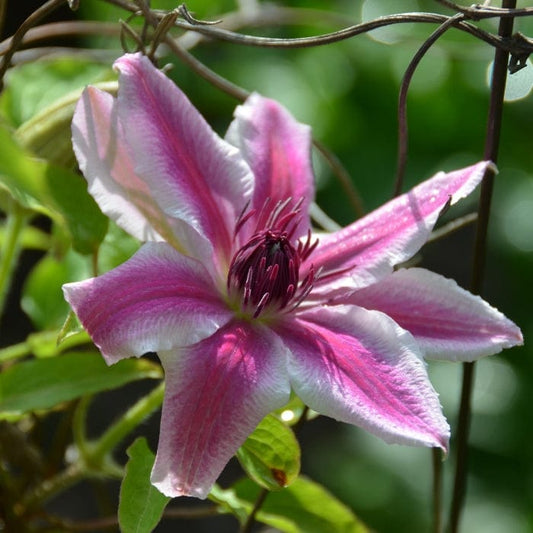
Clematis ‘Carnaby’
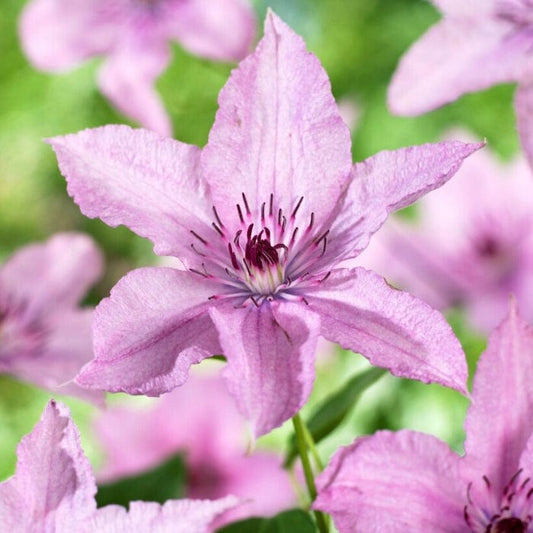
A truly lovely variety, ‘Carnaby’ grows to just two-and-a-half metres or so, making it ideal for an obelisk growing in a large container. Its broad flowers are up to 20cm across, with a two-tone pink patternation and wine red stamens.
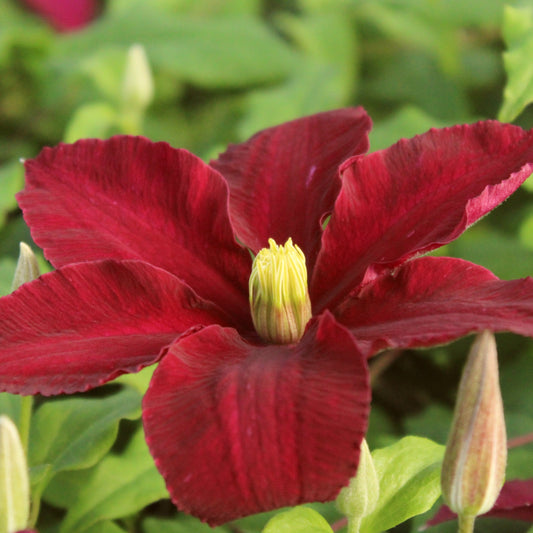
Clematis ‘Niobe’
An RHS award-winning variety with stunning crimson blooms the shade of the deepest Bordeaux vintage. The jewel in any container crown, ‘Niobe’ looks beautiful when trained against a wooden trellis, where you can really see the blooms shine amid the lush green foliage.
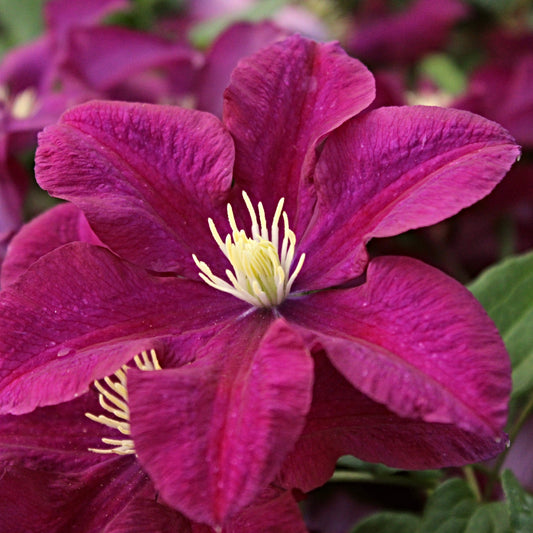
Clematis ‘Warsaw Nike’
Another award winner, ‘Warsaw Nike’ dazzles with its velvety, royal purple flowers and looks best growing up and over a garden arbour/pergola. The butter yellow stamens add excellent contrast to the intensity of the petal hue, and at just two to three metres in height, is a fabulous option for container growing.
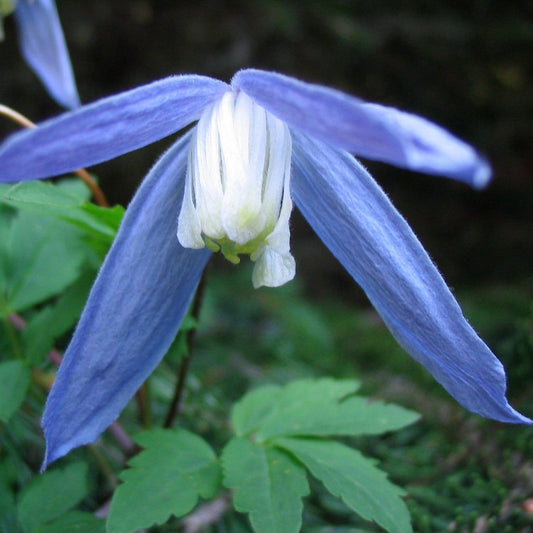
Clematis alpina ‘Bredon Blue’
This Alpine clematis is one of our very favourites here at Roots; with its nodding, bell-shaped flowers in shades of indigo and lilac, ‘Bredon Blue’ is a good pick for gardeners who want their blooms a little earlier in the year (it flowers between March and April).

Problems for clematis plants in pots
While maintenance for clematis plants in pots is nice and easy, there are still a couple of things to watch out for and bear in mind to ensure your plant remains happy and healthy for years to come (clematis plants are long-lived perennials and will reward you with many years of good service when cared for properly).
Root rot
As we’ve established, clematis plants like a good watering – especially when grown in a container, where soil/compost naturally dries out more quickly. That said, even clematis plants can have too much of a good thing, and if drainage is lacking (or inadequate) then the roots can start to rot. As a general rule, check the top inch of compost regularly throughout the growing season, and if it’s dry, give the plant a good watering.
Snails and slugs
Those pesky blighters! Yes, like many other plants, our slimy friends are partial to a nibble or two on clematis plants. Try laying out a protective ring of crushed up egg shells to add some kind of physical barrier to stop them. Sharp horticultural sand is another option, as well as copper tape (which can give an electric shock upon contact).
Powdery mildew
Mildew is another issue that can affect container-grown clematis plants from time to time. It generally stems from poor circulation so, if you’re able, make sure your clematis vines have a nice, open framework through which air can more easily flow. You’ll know if you’ve got mildew if you see a powdery grey substance appearing on the plant.

How to train clematis plants in pots
Unlike other climbing plants, like ivy, for instance, clematis plants aren’t self-clinging. This means they need support around which to wind and attach their tendrils. This is why trellises and obelisks provide such good support. Along with the tendrils, you can help give your clematis a helping hand by tying the vines into its support with twine or soft plastic ties.

Final thoughts
Whether you have a small patio or balcony, or a sprawling and elaborate garden, a clematis grown in a container will make for a wonderful addition. While you’re here, make sure to check out our guides on how to plant a clematis, as well as our guide to the best varieties.
Last updated: 18/12/2025